




- Digital Government
- Digital Government Authority
- Unified Design System
- Platform Code
- Digital Compliance
- User Experience
- Digital Government and Digital Compliance
Digital Government Authority Compliance Guide
Does your government platform meet the Digital Government Authority assessment requirements? Explore our practical guide covering 7 axes and mandatory criteria, helping you review design, accessibility, content, digital services, cybersecurity, performance, and search visibility.
- Client
- Government entities and digital platform providers in Saudi Arabia
- Duration
- 90-day implementation plan
- Services
- Digital Government Authority Compliance Assessment · Unified Design System and Platform Code Review · WCAG Accessibility Audit · Content, Language and Mandatory Pages Review · Website Efficiency and SEO Review · 90-Day Implementation Plan
- 7
- Compliance axes
- 56
- Verifiable criteria
- 3
- Assessment levels for the Platform Code certificate
- 90
- Days for full implementation
01
Why Compliance Matters and the Regulatory Frameworks
Explains why compliance with the Digital Government Authority requirements is essential for a unified and trustworthy digital experience, and reviews the regulatory frameworks tied to digital government work, including the core digital transformation standards, the Digital Experience Maturity Index for government services, the Essential Cybersecurity Controls, and the Personal Data Protection Law (PDPL).
02
Axis 1: Domain, Registration and Digital Stamp
Explains government domain requirements, how to register the platform, and the conditions for using and displaying the digital stamp, accompanied by the certificate number once obtained.
03
Axis 2: Visual Identity and the Unified Design System
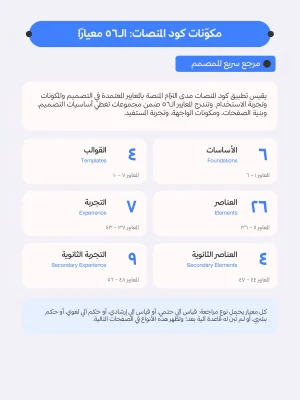
Explains the Platform Code components, which are 56 criteria spread across foundations, templates, elements and experiences, along with implementation tools such as Figma, React and Storybook, the Platform Code certificate and its three assessment levels (design, technical and accessibility), and the limits of relying on automated checks alone.
04
Axis 3: Accessibility (WCAG)
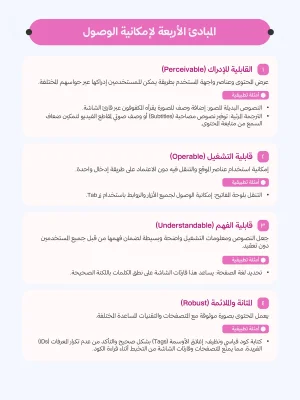
Reviews the four WCAG principles and the A, AA and AAA conformance levels, testing tools such as AXE, Chrome Lighthouse, Accessibility Insights and WAVE, and the assistive technologies a platform should be compatible with.
05
Axis 4: Content, Language and Mandatory Pages
Explains default language requirements and providing content in other languages when needed, the mandatory pages and sections, and an on-page optimization checklist that supports content quality and visibility.
06
Axis 5: Digital Services and User Experience
Focuses on presenting service information in an integrated way and making it easy to reach, and explains the Digital Experience Maturity Index methodology, its main characteristics, perspectives and assessment axes, and related measurement indicators.
07
Axis 6: Cybersecurity and Personal Data Protection
Reviews the Essential Cybersecurity Controls ECC-2:2024 with their four components, 28 sub-components and 108 main controls, along with the principles of the Personal Data Protection Law (PDPL) and the organization’s obligations toward data subjects.
08
Axis 7: Website Efficiency and Digital Content
Explains that website efficiency goes beyond load speed to include technical readiness, device and browser compatibility, and search visibility, covering two main perspectives: technical efficiency and content quality.
09
90-Day Implementation Plan
A phased plan for full implementation that maps the seven axes to clear time stages, helping organizations prioritize remediation and track progress toward compliance.
10
Most Common Mistakes
Highlights practices that create compliance gaps, such as relying only on automated checks without human review, or installing the Platform Code without verifying its actual implementation within the platform, and how to avoid them.
11
Checklist, Sources and References
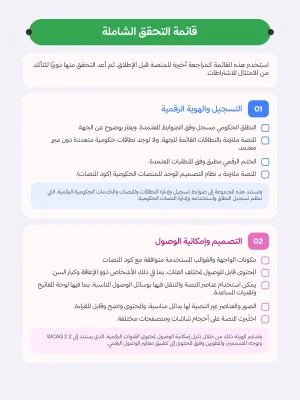
The guide closes with a comprehensive checklist covering the seven axes and a list of the official sources and references it draws on.
Pages from the report
Other case studies

Cybersecurity
No Excuse for Ignorance: A Business Guide to Cybersecurity and Data Protection in Saudi Arabia
Companies and organizations in Saudi ArabiaPDF ↓